The offline maintenance copilot
Walk a technician through equipment they have never seen. No connection required.
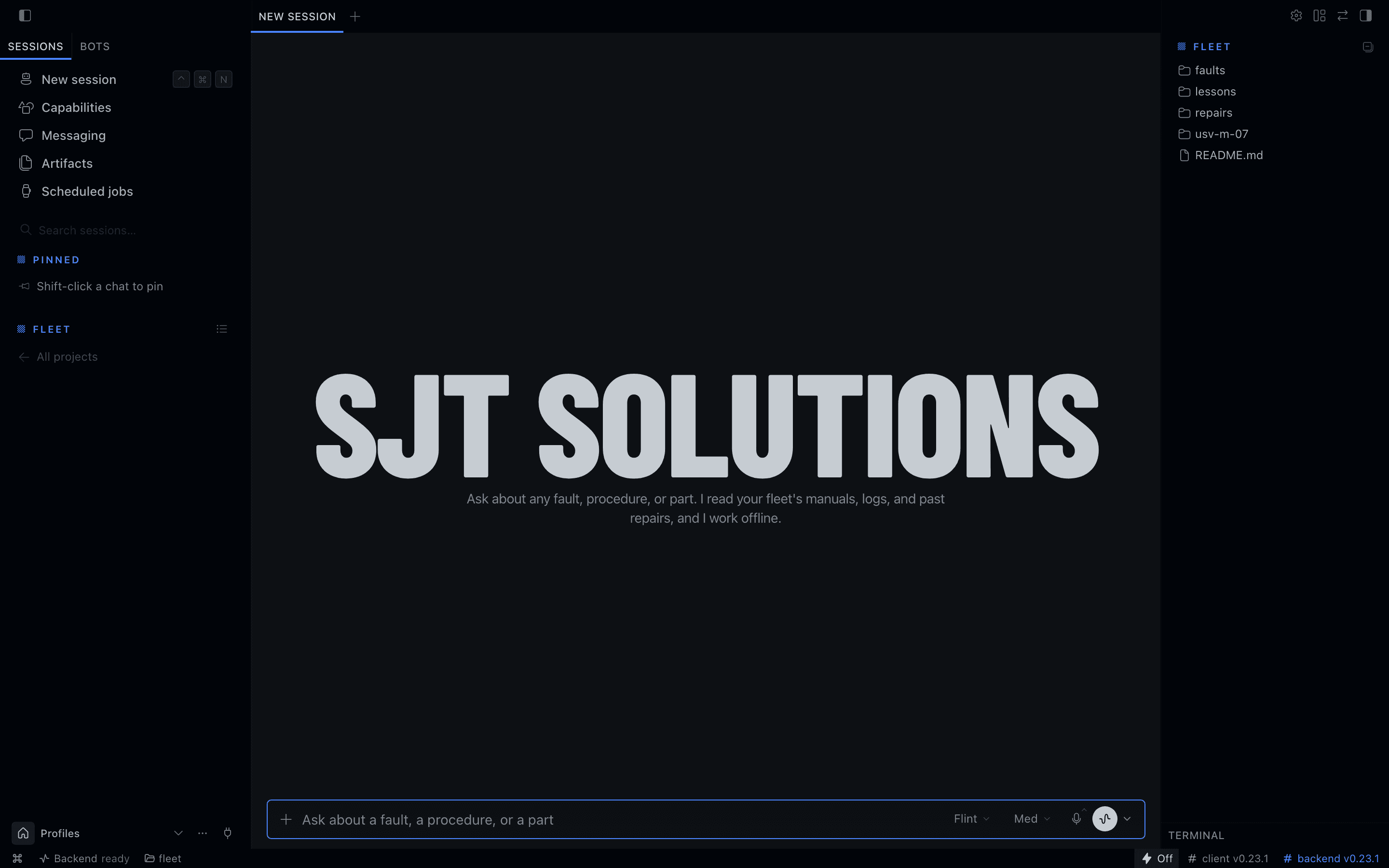
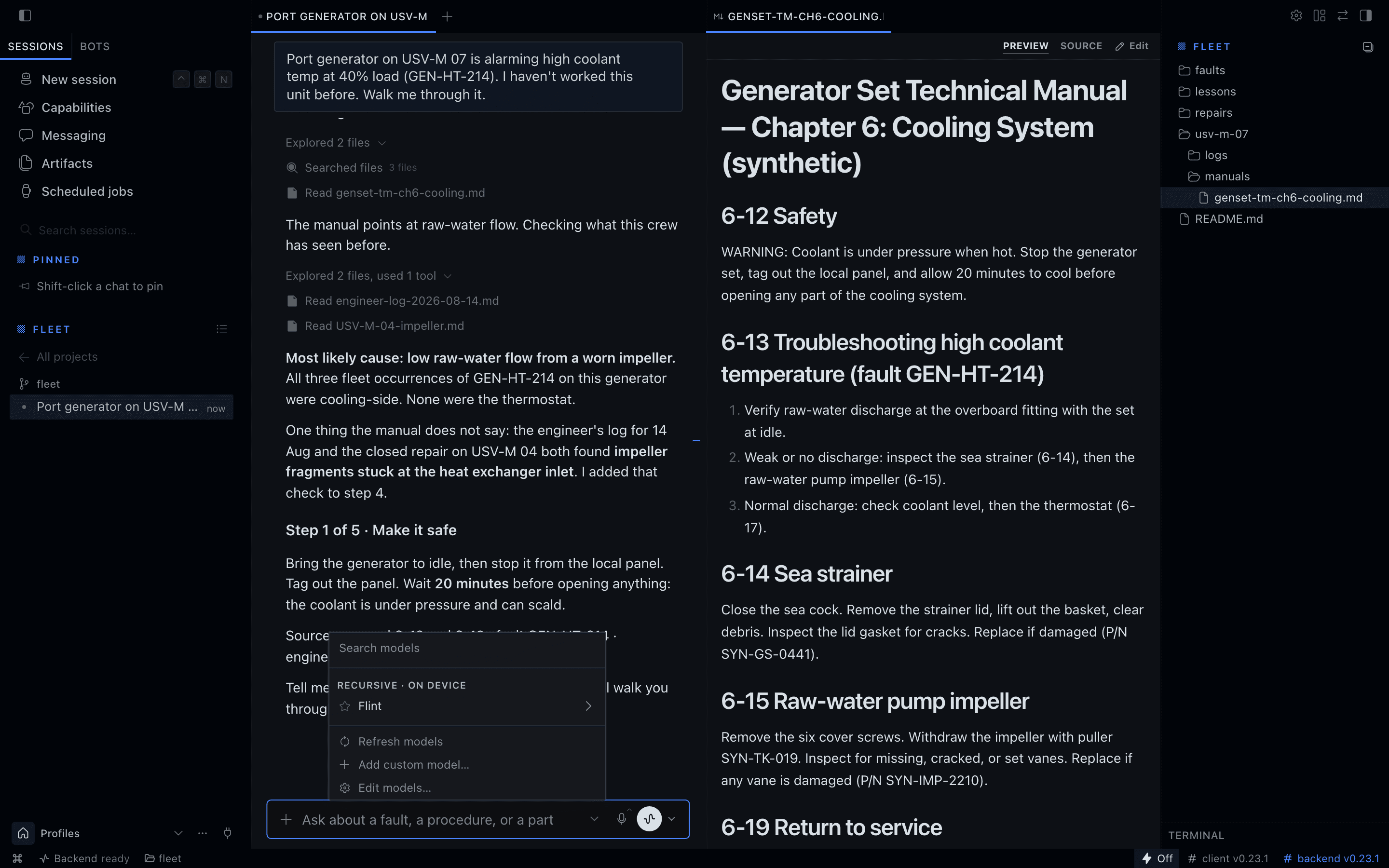
The app opens on the fleet library, with Flint loaded on the device.
Sources, lessons,
and the fleet library
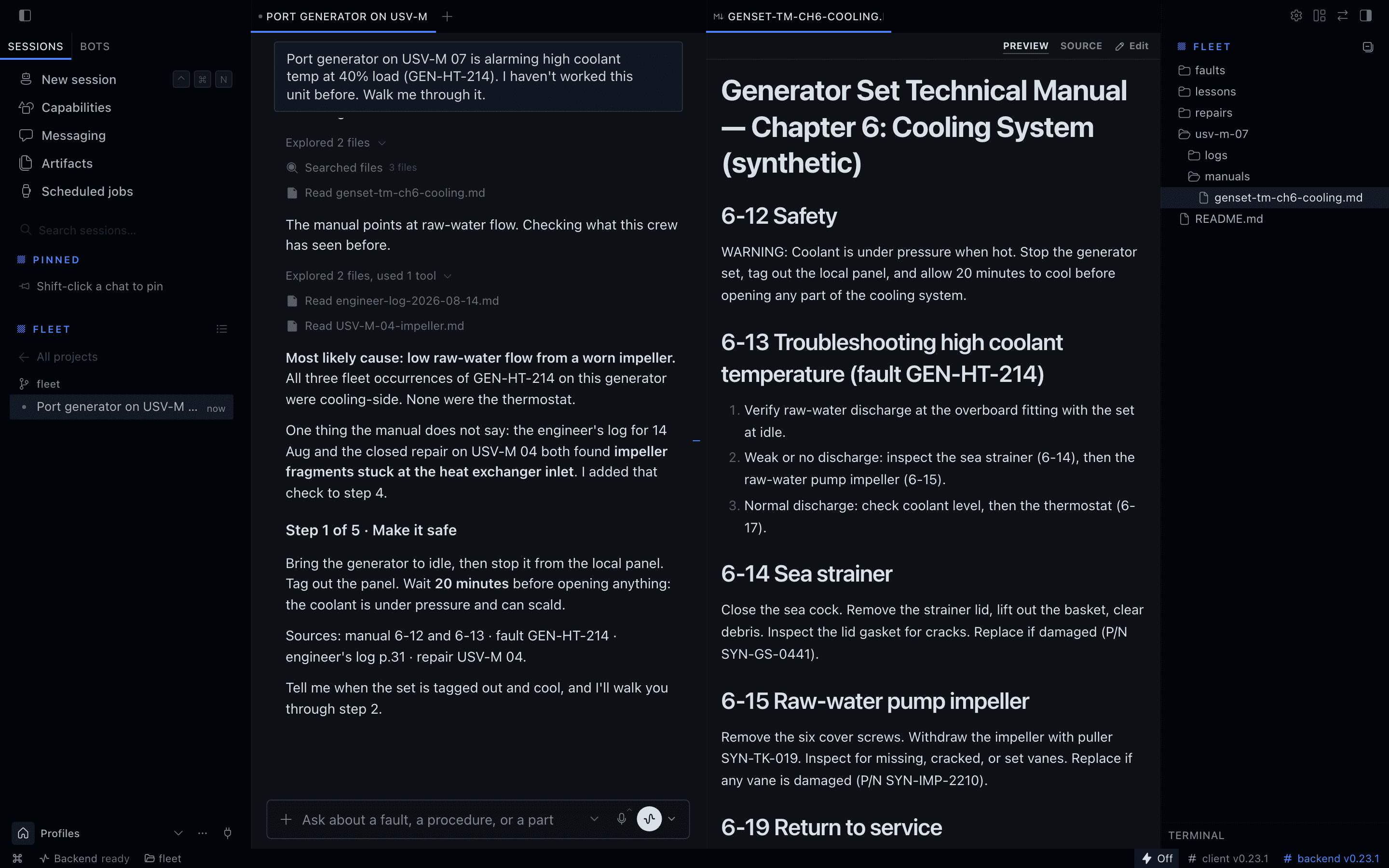
01
The page
Open beside the answer
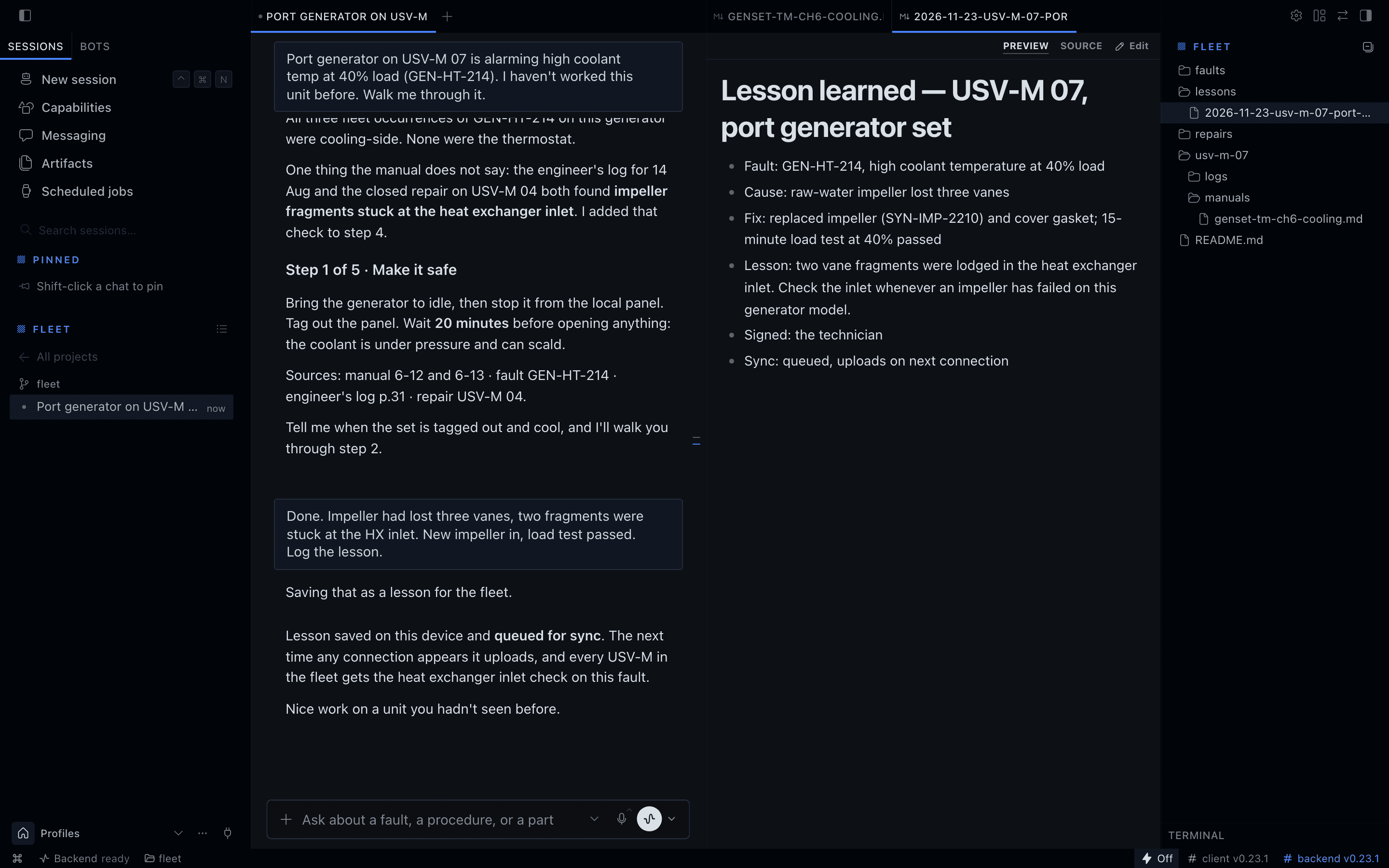
02
The lesson
Signed, then queued
03
The library
On the device
The model our customers love most
by Recursive, San Francisco
American. Open weight. Built for multi-step tool use.
- 39.8B
- Total parameters
- 2.5B
- Active per token
- 22.6 GB
- On disk at INT4
- 125+ tok/s
- On an M4 Pro laptop
- 256k
- Context window
- Apache 2.0
- License
Runs the best American open models
Flint
40B

GPT-OSS 20B
20B
GPT-OSS 120B
120B

Llama
405B

Gemma
27B

Phi
14B

Granite
8B

OLMo
13B
From the laptop
to the rack
Same software, any vehicle.
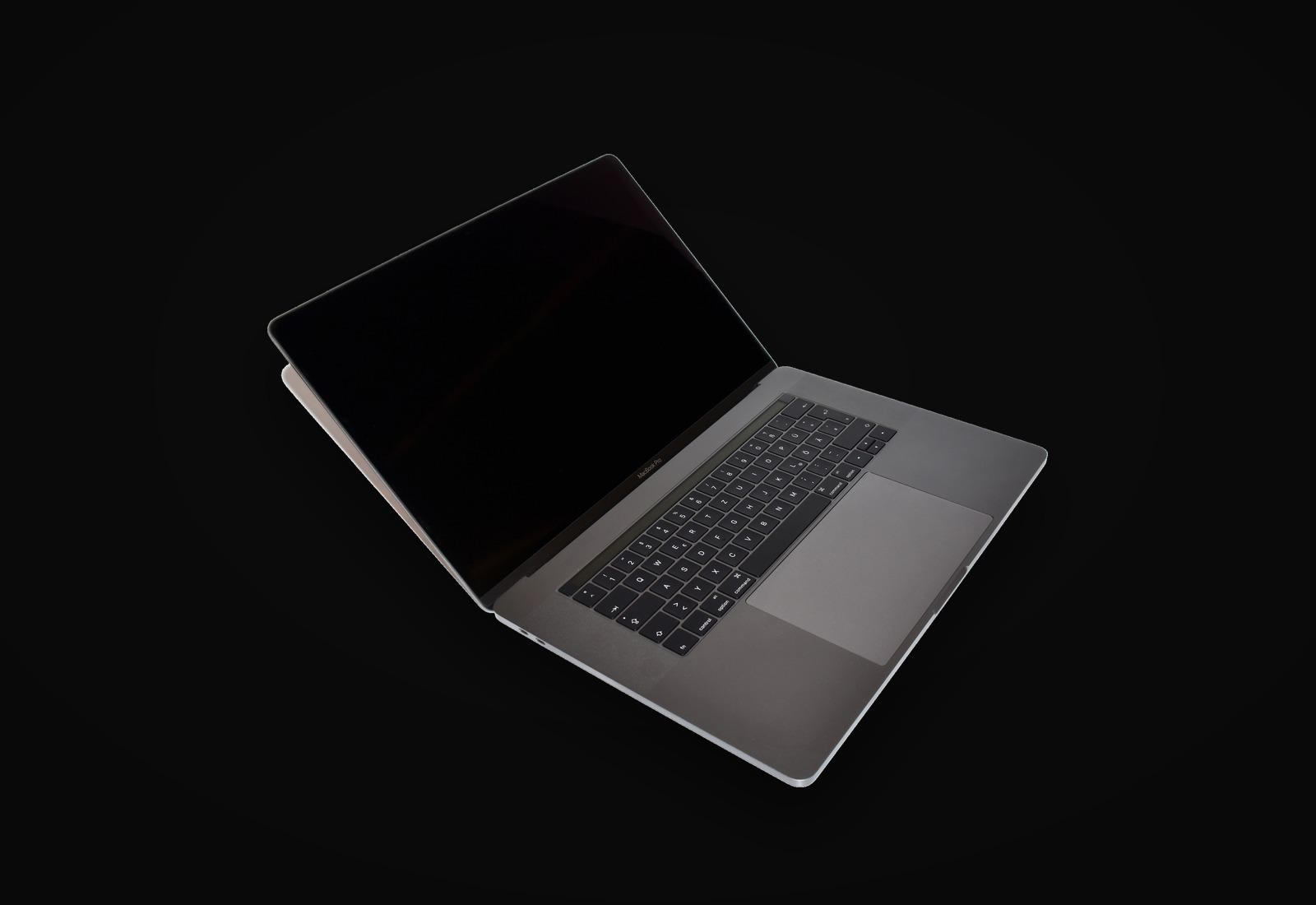
MacBook Pro, M4 Pro
- Memory
- 48 GB
- Runs Flint
- ✓
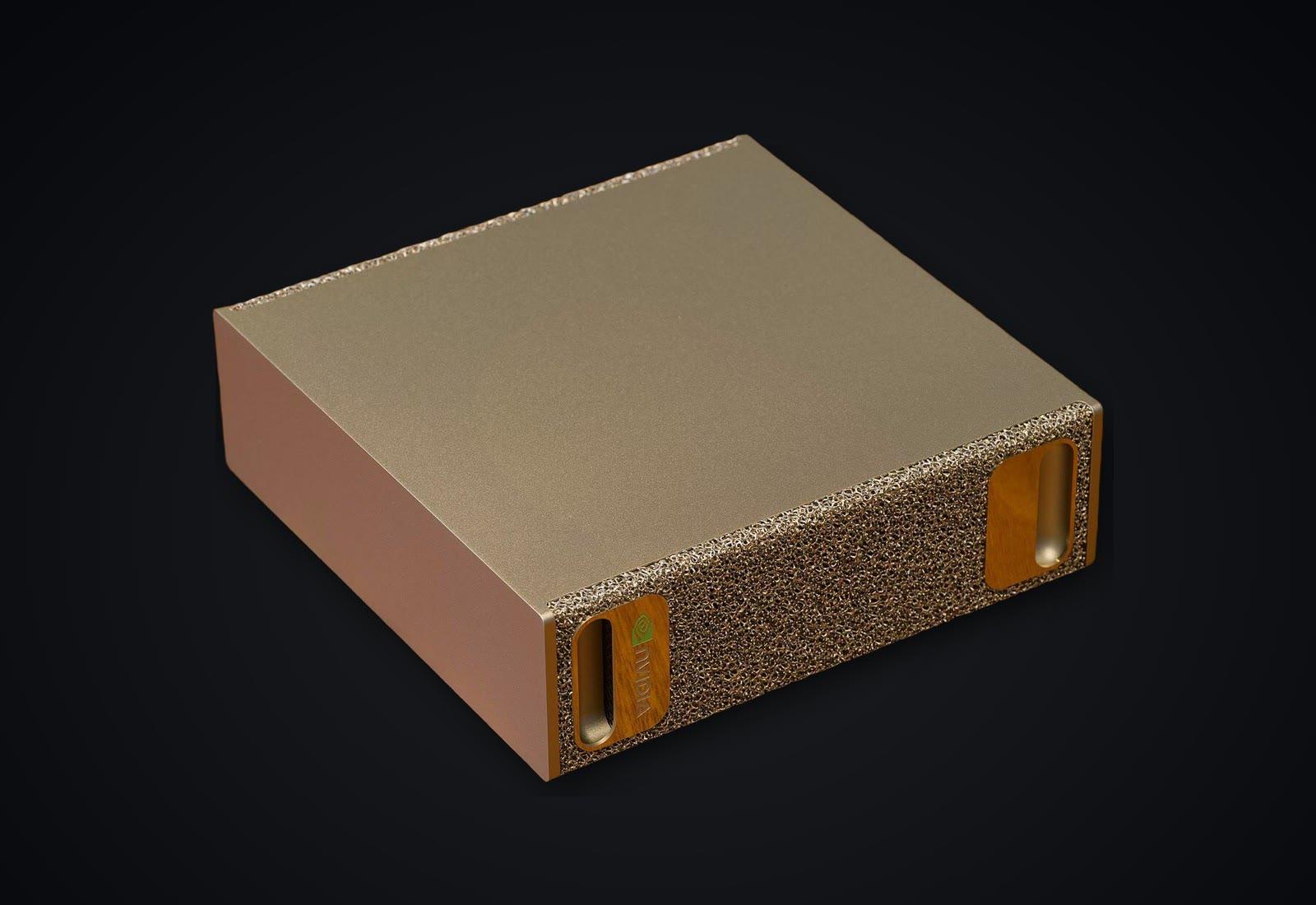
DGX Spark
- Memory
- 64 GB
- Runs Flint
- ✓
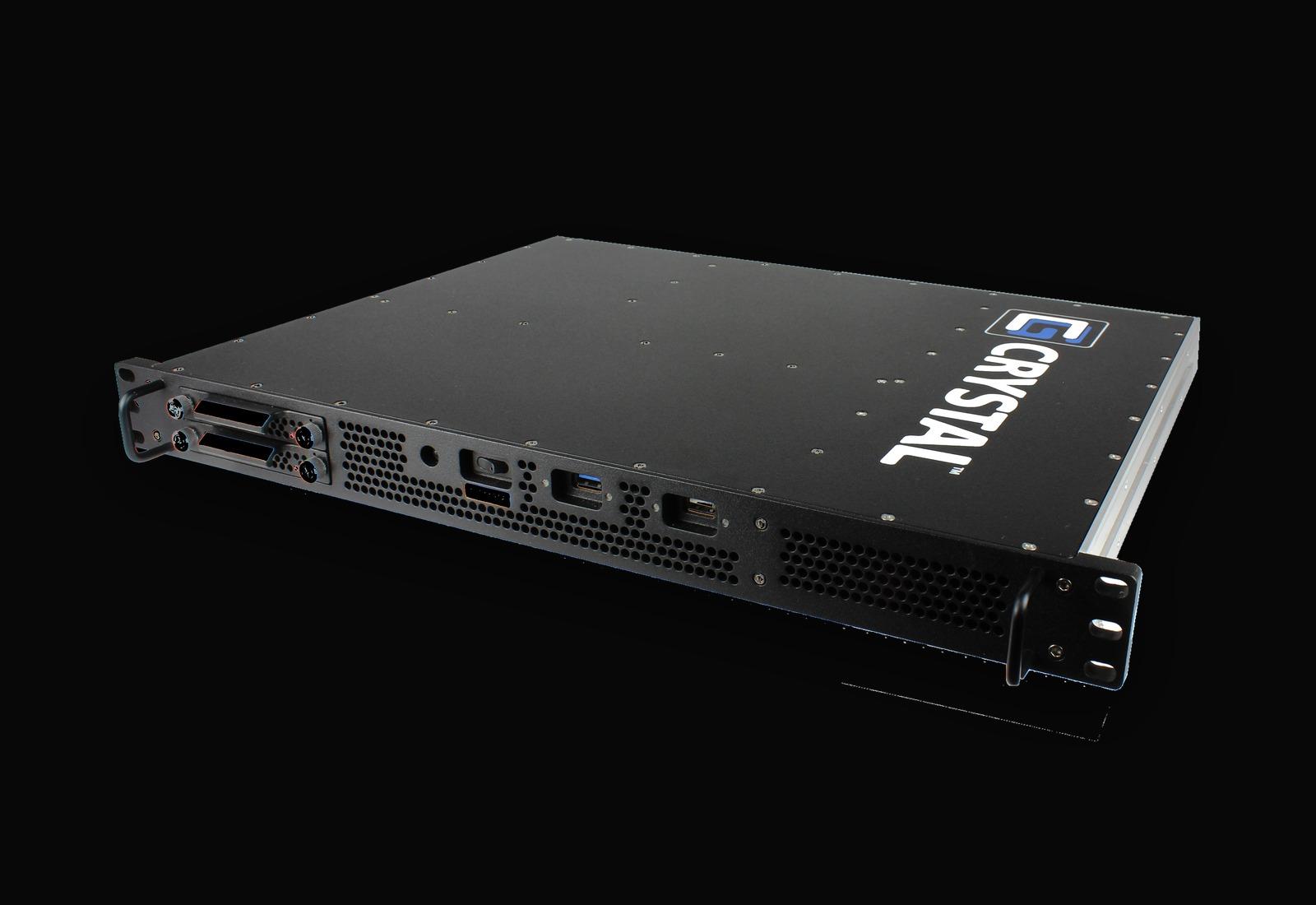
Site server
- Memory
- 80 GB
- Runs Flint
- ✓


Before you ask
In use commercially
Custom versions built for defense companies to help end users maintain complex vehicles.
Proof
Yes. We have built custom versions of this system for commercial defense companies, offered on their platforms to help end users work through the pain of maintaining complex vehicles. The same system is built for any complex vehicle, on any platform a crew maintains.
Yes. The model, the document index, and the repair history all live on the device. Nothing in the diagnose-and-fix loop calls out. A connection is only used to sync lessons learned and pull updated documents.
Possibly none. Smaller American models run on a 16 GB rugged tablet, Flint runs on a 32 GB laptop, and one 80 GB GPU server can serve a whole crew over the local network. The feasibility report sizes each option.
Trust
Every step cites the manual page, fault record, or log entry it came from, and the technician can open the original beside the guidance. When the sources do not cover a question, it says so instead of guessing. Overrides are logged so wrong guidance is caught and fixed.
No. The technical manual stays the authority, and a lesson never overwrites it. The technician makes every call and signs every lesson.
The same procedure is written three ways: step-by-step with safety context for someone new to the unit, condensed for a qualified technician, and a checklist for an expert. The facts and the citations do not change between levels.
Security and data
Nowhere it is not sent. Documents, questions, and repair history stay on the device, with no telemetry. Lessons sync only to an endpoint the government controls, and only when a connection exists.
Phase I is fully unclassified and uses only public and synthetic data, so it needs no clearance. Because everything runs on the device, the same design can move to an accredited classified system in Phase II.
The system makes no outside calls, its components are open source and reviewable, and the model weights can be audited. The Phase II plan includes the path to accreditation on the target tablets.
The government's documents and repair data remain the government's. Our software is delivered under standard SBIR data rights.
Models
Our recommendation is Flint by Recursive. It is American, open weight under Apache 2.0, about 23 GB at 4-bit, and activates only 2.5B parameters per token, so it stays fast on a laptop. The feasibility report tests every candidate on the same maintenance tasks.
No. The topic bans foreign-based models, so Qwen, DeepSeek, and every other foreign-developed model are out. Every model on this page comes from a US company or US research institute.
The weights are open, so the government keeps its own copy and nothing expires. The system is model agnostic: any approved American model can be swapped in from the same picker.
Program
A paper study: a feasibility report with an open-source model analysis, an architecture document for ingest, local caching, and offline-to-cloud sync, an interface mockup like the tour above, and a Phase II plan with metrics, a transition target, and a commercialization roadmap.
A working prototype on rugged tablets, tested with maintainers of complex vehicles. We would measure time to diagnose, first-time fix rate, how often guidance is overridden, and how often a synced lesson is reused on another vehicle.
An American small business. We build AI that works where the network does not, for defense and for the commercial companies that serve it.